 LAMPSTAND HISTORY
The complete text, with three kinds of help in the margin: where a line meets the Bible, what the ancient manuscripts do, and what to notice in the text itself. Large type. No guessing, no sermon.
Download the free samplePDF · 12 pages · chapters 1–5 · no sign-up, no email
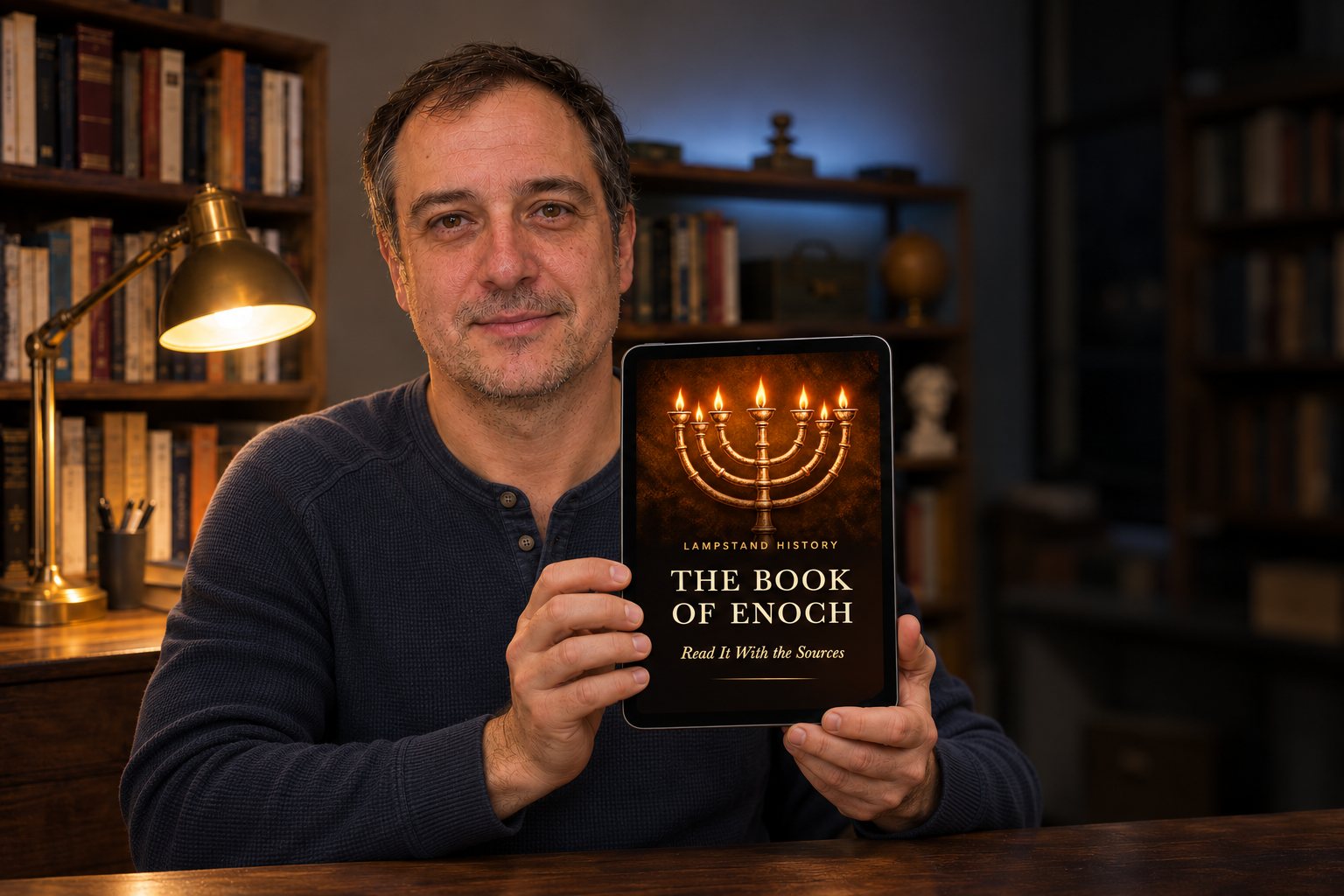
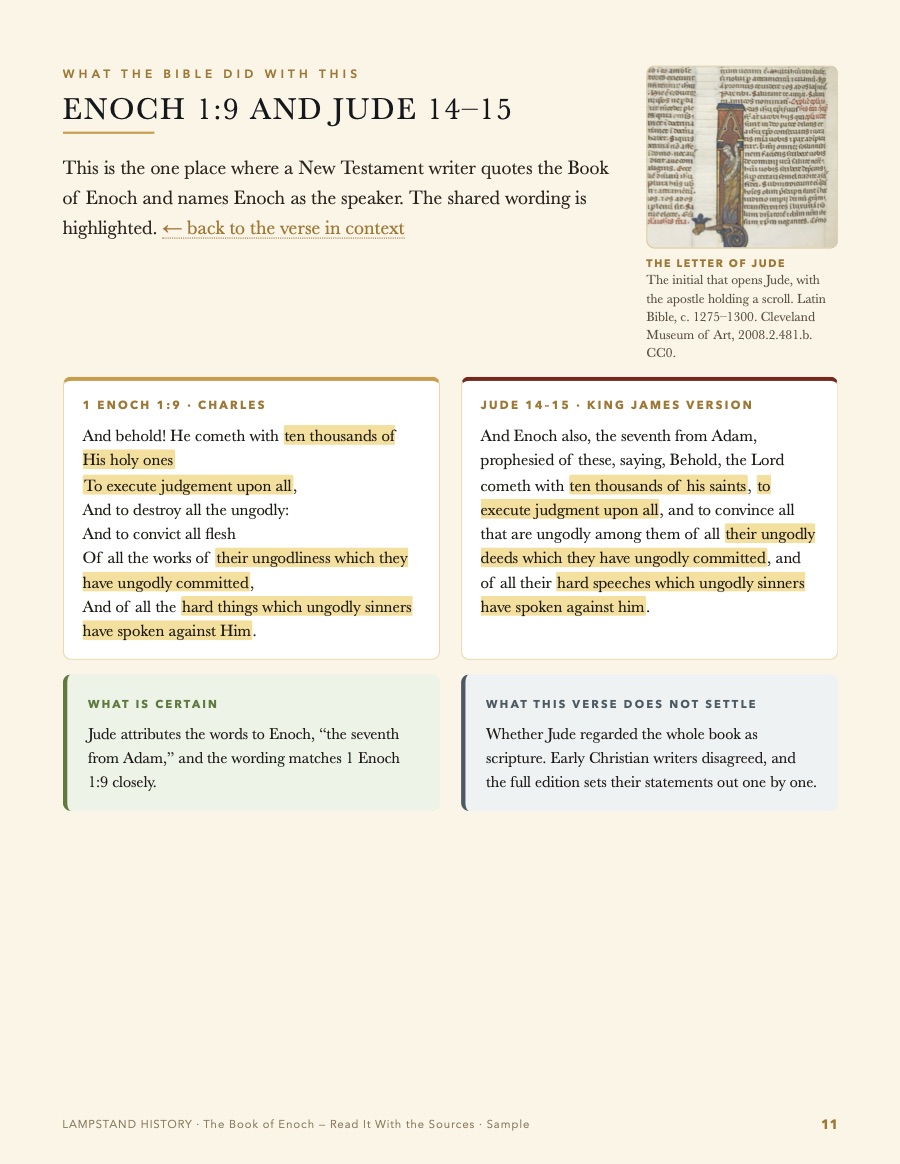
Jude names Enoch and quotes him. Put the two passages side by side and the shared words are plain to see. This is page 11 of the free sample, and it is how the whole edition works: the text, then the evidence beside it.
Open a plain copy of Enoch and the questions start on the first page. Is this line in the Bible? Why are there brackets everywhere? Is this what the manuscript says, or what someone thinks it means? This edition answers in the margin, in three colours, so you always know which kind of answer you are reading.
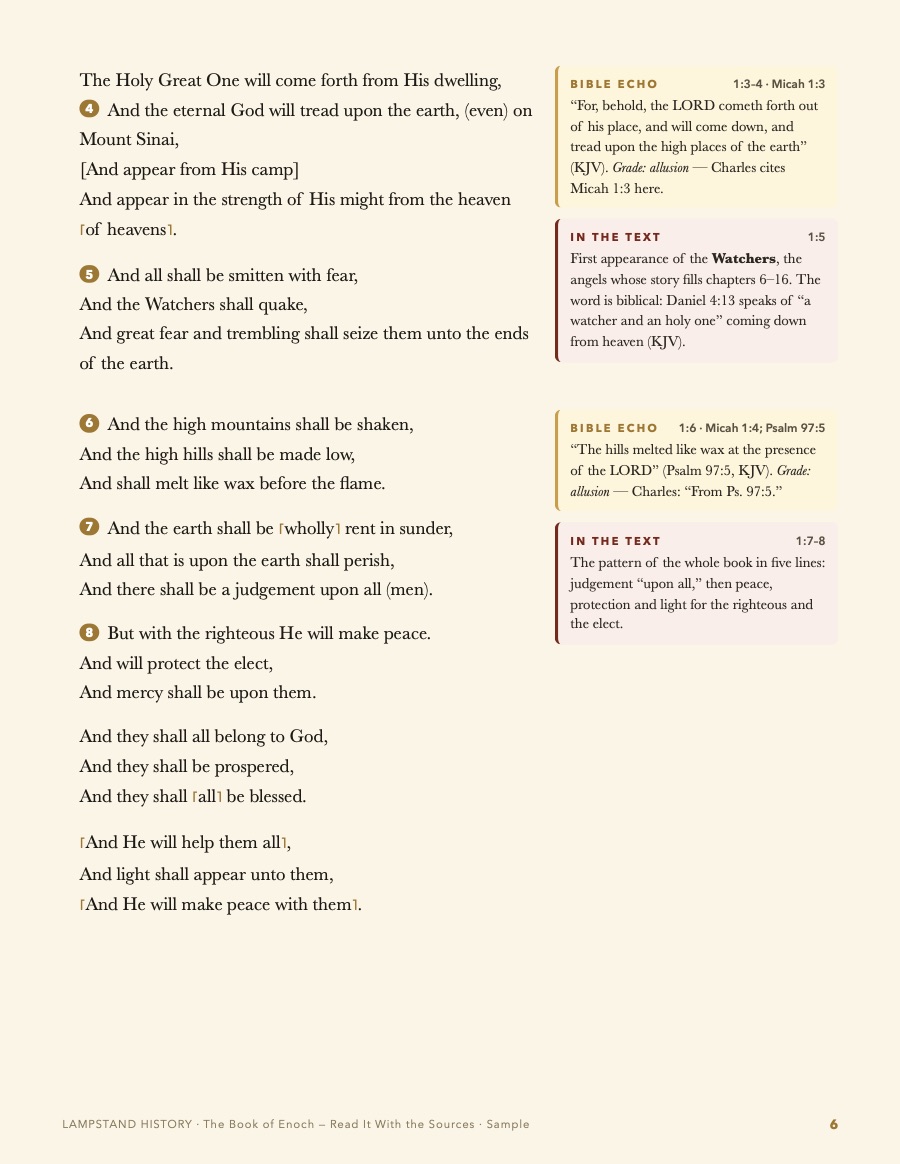
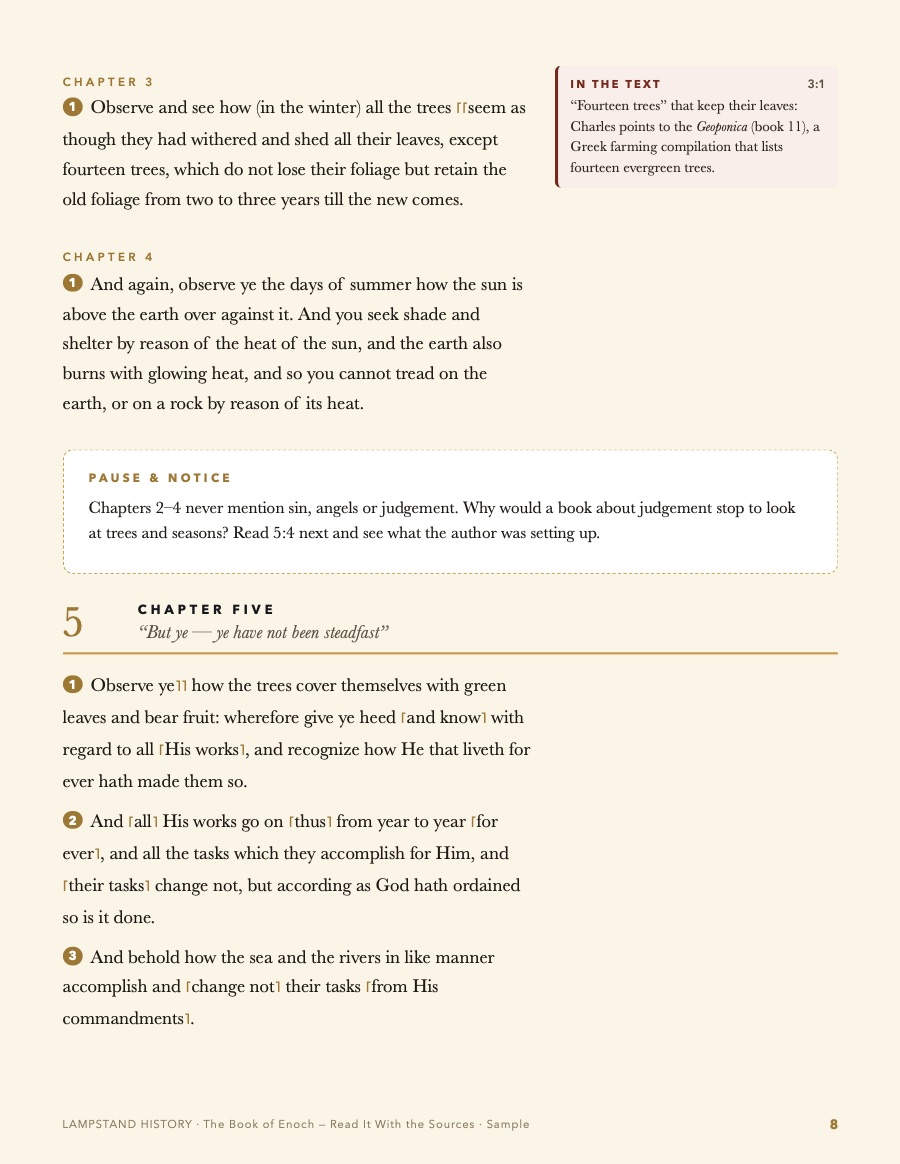
PDF · 12 pages · chapters 1–5 · no sign-up, no email

“On the channel we keep saying the same thing: check the source. This is the book that lets you do it, verse by verse.”
Our investigation of Enoch and the gods of Greece has been watched more than 110,000 times. A video can show you a verse for a few seconds. We wanted you to be able to sit with the whole text and know what you are reading.
So we took a translation that has been in print since 1912, kept every word and every sign, and set the evidence beside it. Where a connection is our reading and not a stated fact, the note says so.
 YOUR GUIDE ON LAMPSTAND HISTORY
| A plain copy of Enoch | Read It With the Sources | |
|---|---|---|
| The complete text | Yes | Yes |
| The translator’s brackets and signs explained | Rarely | On page one, with an example |
| Bible parallels | You look them up | Beside the verse, graded by strength |
| What the manuscripts do | Not shown | Noted where they differ |
| Fact and interpretation kept apart | Up to you | Marked in every note |
| Type size | Often small | Large, with nothing split across pages |
Every note is being checked against its source one more time before we put a price on it. Book One will be available on this page. Until then, the first five chapters are yours, free.
PDF · 12 pages · no sign-up, no email
R. H. Charles (1855–1931), first published at Oxford in 1912. It is in the public domain. We keep his text and his signs exactly, and explain them.
It is part of the Bible of the Ethiopian Orthodox Tewahedo Church. Most other churches do not include it. The letter of Jude quotes one verse of it by name.
No. The notes report what the text says, what the manuscripts do, and where a wording comes from. When a link is our reading and not a stated fact, the note says so.
No. It is a PDF. Every phone, tablet and computer opens it, and you can print it on US Letter paper.
Lampstand History, an independent YouTube channel that investigates biblical questions through ancient history, language and archaeology. The sources for every note are listed in the book.
Book One covers chapters 1–36, the Book of the Watchers. The remaining four books follow in the same format.
See how it reads. If the margin answers the questions you had, the rest of the book works the same way.
Download the free samplePDF · 12 pages · chapters 1–5 · no sign-up, no email